


Essay 2: "Not for me, thanks."
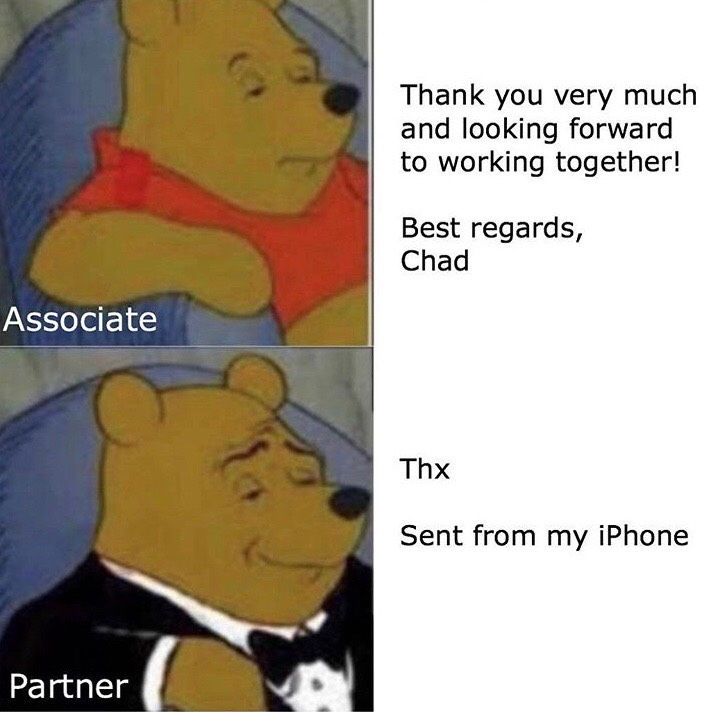
What you're looking at in this month's essay title is the entirety of the response I received rejecting my essay guide to being a high school teacher.
"Not for me, thanks."
Sent from my iPhone.
It took twelve hours from the moment I hit send, to the moment this beauty arrived in my inbox. This is speed-of-light type response for the publishing world--and maybe something I could have waited the requisite 6-8 weeks before reading, but, beggars and choosers and all that jazz.
The truth: I was not surprised when I received a rejection. I think after the last twenty years of enduring the highs and lows with publishing, I send queries anticipating a good ghosting from most agents, or even a kind "you're a great writer, but we can't take you on," email. I lived middle school--I understand that some of us do not turn into swans, no matter how much time passes.
No, it wasn't the rejection that surprised me. It was the speed. And the brevity:
"Not for me, thanks."
Sent from my iPhone.
Perhaps this agent was standing in line at Starbucks as they perused my query; maybe—definite maybe—they even got to the first lines of my actual memoir before deciding, Hell no.
Or maybe not.
Maybe the rejection was decided in those first lines of the query when I had to describe the memoir as both reflective and meant to help current high school teachers. Maybe there’s another writer already doing this and doing it better. Or maybe there is no value in what I’m writing.
Whatever the reason, this response made me think of my students and their reactions when they receive grades back, the heartache or irritation I can see, the amusement in some when they forget that they wrote something snarky as the title and forgot to change it before turning it in. It also reminded me of the conversation I had a few months earlier when I had to remind many of them that my grading is not personal: "It feels personal because you're a person, but my job? It's the words and their structure, not the person. I promise."
And yet, I know how they feel. I know why they want to flip my comments and grades back to me and say, “How dare you? I worked hard on this.”
Because I know they did. Just as I know hard work does not always equal perfection, merely part of the process.
"Not for me, thanks."
Sent from my iPhone.
I'm a girl who can spiral. I can take something as simple as a four word email and make it about my entire self-worth. Truly. It's a gift. The reality of this rejection is that even though I expected it, I was still moved by it, still made to feel small and insignificant, still made to feel like a failure because the project I've been working on for three years was ground down to nothing in less than twelve hours and four words.
"Not for me, thanks."
Sent from my iPhone.
But the further I get from my initial reading, I have to wonder if maybe, just maybe, the agent’s email said it all, no more, no less: This novel was just not for him. Full stop. But thanks for trying. Full stop. Send. *receives coffee and gets on with day.
It's easy to make failure a crutch, or, for me, a funny story that becomes the crutch: I've been rejected in less time than it takes to get through security at the San Diego airport, haha. Let me relay this funny story to you so I can process it while it runs through my mind on repeat.
Except, while I lean on this bit of self-deprecating humor, I don't send my manuscript out again. I don't search out another agent or another possible query, and I don't write anything else. Because it's comfortable to blame the high demand of the publishing world and the agents inside of it instead of looking at how I can move forward. Maybe even alter what is most decidedly a convoluted memoir-that-is-not-a-memoir before sending it again. Which is something I talk about a lot to my classes: this is one day, one writing, one chance. There will be another tomorrow and the next day. Use them.
This is reality (one my students can be happy knowing I’ve experienced alongside them): rejection and correction and trying one more time as many times as it takes. The other reality is that writing is something that is always changing; while the rules stay the same, the style, diction choices, fluency, character arc, and readability of a story, of what some may desire, is a target that never stays in the same place.
Which means (line of reasoning) we--I--have to continue moving, adjusting, adapting, and evolving, too. Because feeling like a failure? "Not for me, thanks."


Comments